
Foot stiffness can make simple parts of the day feel harder, from getting out of bed to standing in line or walking after a long drive. The right tools can help you add gentle movement, stretch tight areas, and build better foot control at home. Innovative tools are not a cure for pain or injury, but they can support a steady routine that keeps your feet feeling more ready for daily activity.
Massage Balls For Rolling Tight Arches
A firm massage ball is one of the simplest tools for foot mobility. You place it under the arch, roll slowly from the heel toward the ball of the foot, and pause on tight spots without pressing hard enough to cause sharp pain. This can be done while sitting at a desk, watching TV, or winding down at night.
A tennis ball gives a softer feel, while a lacrosse-style ball feels firmer. A textured foot ball can add more surface pressure, but it is not always better. The goal is steady pressure that feels useful, not painful. Rolling can work well before stretching because it helps you notice which areas feel tight.
Stretch Straps For Calves And Foot Flexibility
A stretch strap, yoga strap, or sturdy towel can help you pull the toes gently toward the body while the leg is straight. This targets the calf, Achilles area, and the bottom of the foot. Stretching the arch and Achilles area is often used to ease discomfort linked with plantar fascia tightness.
This tool is helpful because it lets you control the stretch without standing. That makes it a good choice in the morning, after travel, or after long periods of sitting. Keep the stretch mild and steady. Bouncing can make the movement harder to control, especially if your feet already feel stiff.
Toe Separators For Spacing And Gentle Resetting
Toe separators are soft spacers that sit between the toes. They are often used while relaxing at home, not while doing heavy activity. For people whose toes feel crowded from narrow shoes, they can create a gentle feeling of space and remind the foot to spread more naturally.
Start with short sessions. Some people feel too much pressure if they wear toe spacers for too long right away. A few quiet minutes while seated is a safer way to test them. They should not cause numbness, tingling, or sharp pain. If they do, stop using them and choose a gentler mobility tool.
Slant Boards For Controlled Calf Stretching
A slant board lets you stand with the toes higher than the heels, creating a calf stretch. This can be useful because tight calves can affect how the foot moves during walking. A board with different angle settings gives more control than using a curb or stair.
Use a wall, counter, or chair for balance. The best stretch is calm and easy to hold. If the angle feels too strong, lower it or switch to a strap stretch. A slant board is not the first tool everyone needs, but it can be useful for people who want a repeatable standing stretch.
Resistance Bands For Building Better Foot Control
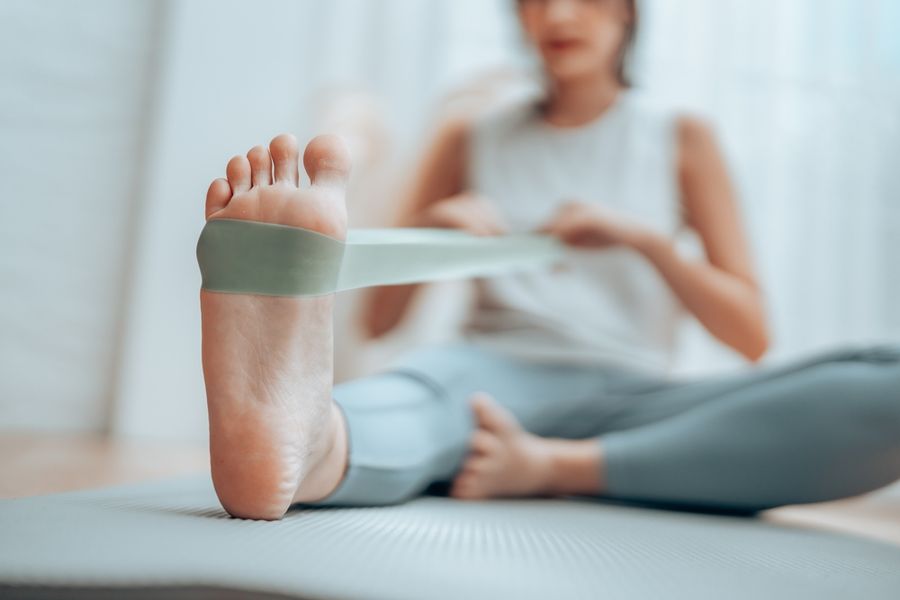
Resistance bands help train the foot and ankle through light movement. You can loop a band around the forefoot and move the foot up, down, inward, or outward with control. A guided strengthening plan may include work for the lower leg muscles as well as stretches for the plantar fascia and Achilles tendon.
This matters because stiffness is not always only about tight tissue. Sometimes the foot feels stiff because smaller muscles are weak or slow to respond. Light band work can help the foot practice moving through a wider range without needing heavy equipment.
Towels For Simple Toe And Arch Exercises
A towel can become a foot-strength tool. Place it flat on the floor, put your foot on top, and pull the towel toward you by curling your toes. This trains the small muscles on the bottom of the foot that help support the arch.
Towel work is easy to overlook because it feels simple. That is also why it is useful. You do not need much space, and you can keep the movement slow. Try to use the toes without lifting the whole foot off the floor. This keeps the focus on control instead of speed.
Balance Pads For Stability Practice
A soft balance pad adds a small challenge for the feet and ankles. Standing on one foot or shifting weight side to side can make the foot react to an uneven surface. This can help people who want more control during daily movement.
Use support at first. A kitchen counter or sturdy chair can make balance work safer. The goal is not to wobble as much as possible. The goal is to teach the foot to adjust calmly. Start with both feet, then move to one foot only if that feels safe.
Choosing The Right Tool For Daily Use
The best tool is the one you will actually use. For most people, a massage ball, strap, and towel are enough to build a simple routine. These cover rolling, stretching, and strengthening without taking up much room.
A slant board, toe separators, resistance bands, or balance pad can be added later if you want more variety. Pick one tool for the tightest part of your day. Morning stiffness may respond better to a strap or ball, while end-of-day fatigue may call for towel work or gentle rolling.
A Simple Way To Keep Feet Moving
Foot mobility works best when it becomes part of normal life. You do not need a long routine. A few minutes of rolling, stretching, or toe work can make the habit easier to repeat. Small tools are useful because they remove excuses and keep the process simple.
Stop any movement that causes sharp pain, spreading numbness, or swelling. Ongoing foot pain should be checked by a qualified professional. For everyday stiffness, though, the right tools can make foot care feel less like a chore and more like basic maintenance.